
One Week — Turtle River Lake
A great introduction to French immersion, camping, and life outdoors.

 About Les Voyageurs
Become a voyageur. Speak French. Live outdoors. Build your crew.
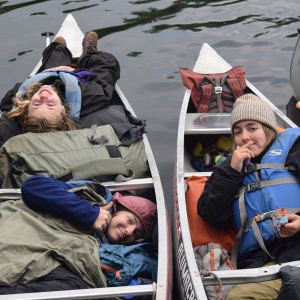
Les Voyageurs is the only French and wilderness program in northern Minnesota. Here at Concordia Language Villages basecamp Les Voyageurs, we bring the world of the historic French voyageurs to life through canoe travel, camping, French language, hands-on learning, and the shared adventure of living in nature. A full immersion experience in the outdoors by living exclusively outdoors, experiencing the joys and challenges of outdoor communal living, canoe trips, and magnificent landscapes.
Our wilderness tripping station sits adjacent to the French Village, Lac du Bois, and is designed to feel like a national park campground from another era. Villagers arrive by canoë, pull into the dock, and settle into their camping community. The grand feu de camp becomes the setting for our daily rendezvous where history, stories, songs, French, games, and good-natured competition bring everyone together.
At Les Voyageurs, you don't simply learn about the outdoors or the voyageurs you become one. You’ll be saying “Je suis voyageur!” in no time.
Throughout your time at Les Voyageurs, four goals are woven into everything we do:
You don't need to arrive as an expert canoeist, fluent French speaker, or elite athlete. Les Voyageurs is a place to learn by doing. Staff and fellow Voyageurs support one another when the mental or physical challenges of wilderness travel arise. Together, the crew learns to paddle the miles, prepare meals over a fire, solve problems, communicate effectively en francais, and take care of one another.
There is no “typical Voyageur” profile; Voyageurs campers are widely diverse!
Some haven’t yet had the opportunities to know if they are “outdoorsy”
Some know that they want to break free from the norm, free from their screens, and are ready for a unique experience
No prior experience in French or the outdoors is needed.
The only real requirement is open-mindedness and curiosity.
The result is more than a camping trip. It is an opportunity to discover what you can accomplish when a group works together.
A great introduction to French immersion, camping, and life outdoors.


Life at Les Voyageurs is active, social, hands-on, and occasionally delightfully ridiculous—in the best possible way.
One day you might canoe with your tent partners, learn to pitch a tent, split logs, build a fire, or prepare roubabou, a traditional split-pea stew. You might practice a canoe tip-and-rescue, identify plants, work with leather or wood, or challenge your friends to a strategy game.
Then the day might take a turn toward the unexpected: learning jokes in French, dancing la Bastringue, singing around the fire, kneading bannock, meeting fur traders, or watching the sunset while listening to loons call across the lake.
And yes, sometimes the most memorable part of the day is simply sitting beside the fire with your friends, telling stories in French and watching the stars come out.
Every day gives you another chance to become more capable.
After time at basecamp, your crew is ready for the Grand Voyage or Immense Voyage (for credit).
Over the course of the trip, the landscape becomes your classroom. Staff support through guiding and helping villagers interpret the relationship to the places they go en Francais.
One afternoon, you might find yourself looking across a lake toward the U.S.-Canada border. The next morning, you could be studying pictographs left by Indigenous peoples whose relationship with this land stretches back long before the voyageurs arrived.
You'll navigate waterways with map and compass, study the plants and animals around you, investigate how humans have interacted with wilderness, and consider how history continues to shape the places people visit today.
On canoe trips, the daily rhythm expands to include recreational swimming, compass-and-map navigation, flora and fauna identification, ecosystem studies, investigations into human interaction with wilderness, artisanal crafts and camping projects, gathering driftwood, and preparing meals over the fire.
At Les Voyageurs, the canoe and camping adventure is only the beginning.
You'll learn to navigate unfamiliar waters, sleep under the stars, cook over a fire, solve problems as a team, communicate in French, explore history, and take responsibility for yourself and the people around you. You'll discover that wilderness travel requires more than strong arms. It requires patience, flexibility, humor, communication, and willingness to help when someone else needs it.
And somewhere between the paddling, the French, the campfires, the songs, the history, the laughter, and the occasional struggle against the wind, something happens:
You stop being a student on a camping trip and start becoming a voyageur. The curriculum blends French, leadership, and adventure to create an atmosphere that provides challenges that are physical and mental.
At the end of the Grand Voyage, you'll return to basecamp for stories, voyageurs-style competitions, and a final gathering around the campfire.
While we won’t be eating pemmican each day, you won’t go hungry at Les Voyageurs, as in fact our calorie content is higher for our wilderness program. Lots of healthy proteins ranging from traditional North American beans (les trois Soeurs) to delicious meat prepared over the campfire grill. We welcome all kinds of dietary needs and work to prepare our meals for communal cooking to avoid anything that might make any of the team members ill from a shared cooking pot. Meals are a mixture of modern camping and traditional North American cooking to highlight indigenous, Canadian, and calorie dense foods to keep the mind open to new French songs and muscles moving alongside each other in the canoe.
Staff in the Les Voyageurs program are highly motivated educators. Each staff crew is made up of skilled French language and culture, musicians and artisans, Lifeguards, Wilderness First Responders, and outdoor enthusiasts with varying skills in backpacking, canoeing, outdoor living, and team building.
Need-based scholarships are available for Les Voyageurs summer youth immersion sessions through the Passport Fund. Scholarships are based on a family’s adjusted gross income, number of dependents and the length of the session.
Additionally, the Minnesota Office of Higher Education offers a $1,000 stipend for Minnesota students who qualify for free or reduced lunch at school.
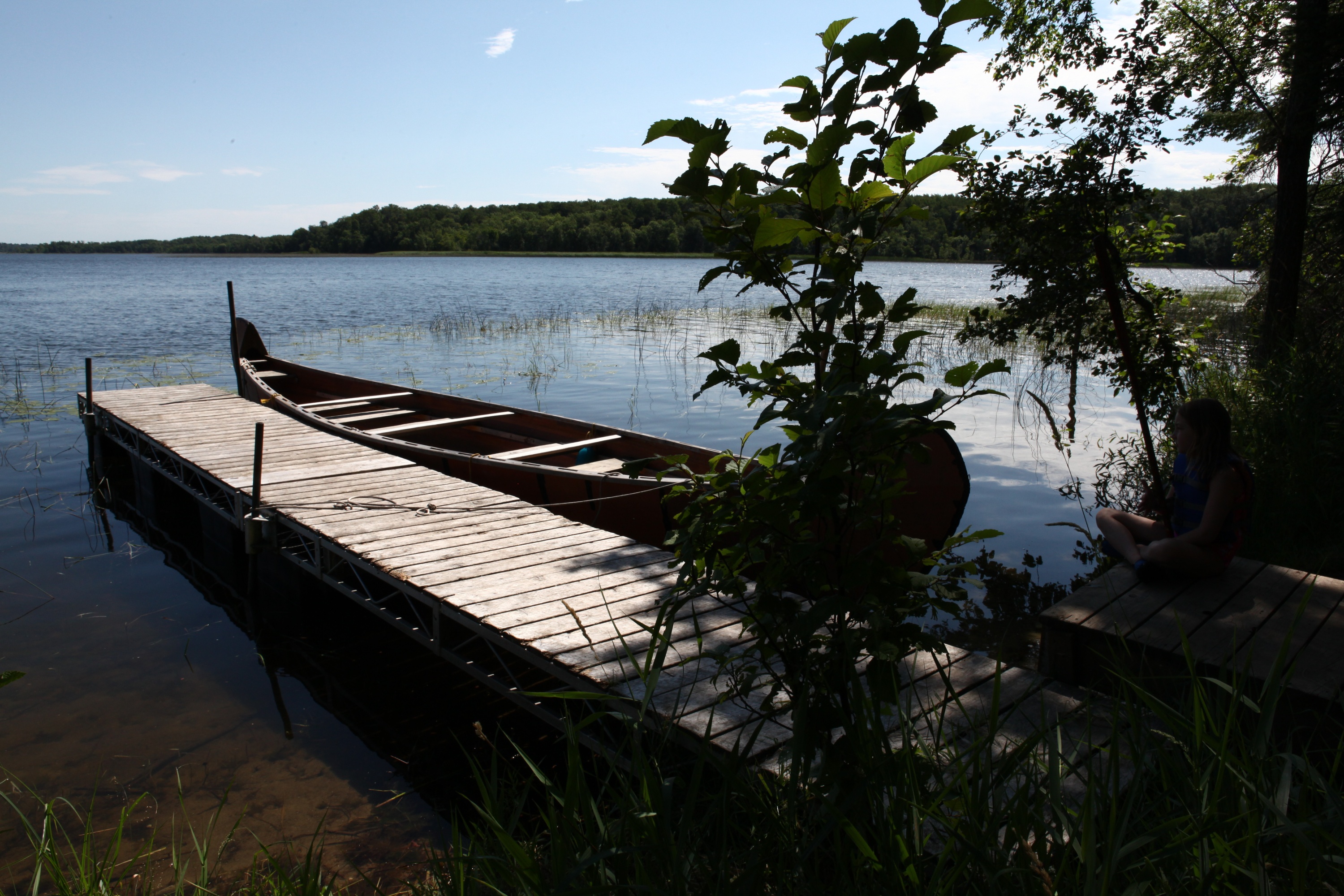
The Les Voyageurs permanent base campsite is located on Turtle River Lake, just a short distance from the French Language Village, Lac du Bois. Check-in for Les Voyageurs programs is at the Lac du Bois site.
Up to four villagers share a tent and staff share tents nearby. Canoes are used for tripping and transportation of food and supplies, as well as mail. All meals are prepared by villagers and staff over an open campfire. Groups portage their tents and supplies on five- to nine-day camping excursions.
Minnesota is typical of a continental climate. The North Woods of Minnesota experiences the widest variety of weather in the United States. Although summers are generally hot and humid, it is normal to experience rain showers, thunderstorms and cool nights. Summer temperatures average 85 F but can get down to 55 F. This program lives outdoors, regardless of the weather, so come packed and prepared to handle a wide variety of temperatures and dry or wet weather.
Read more about our professional staff at Les Voyageurs, our French Voyageurs Language Village.
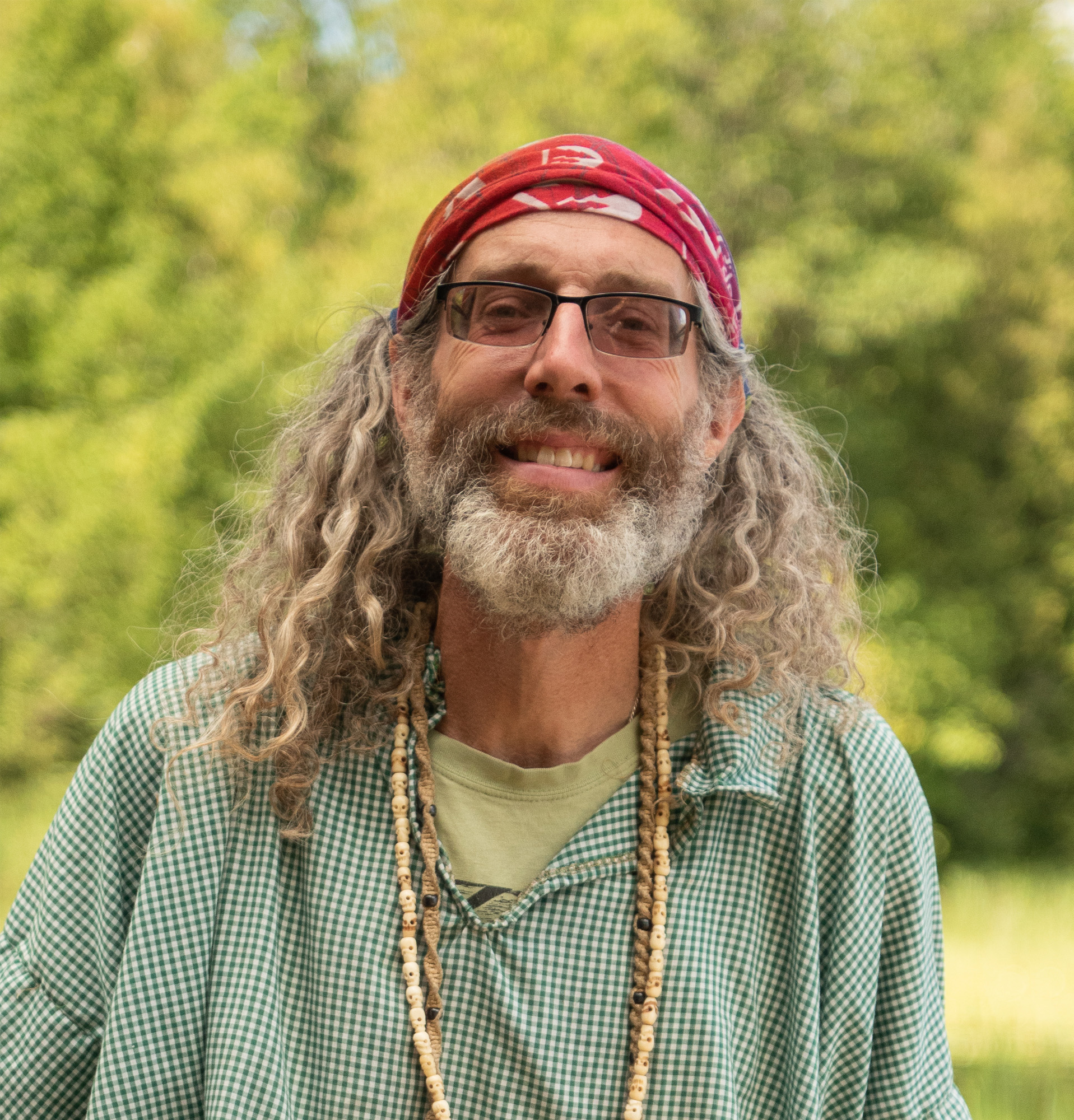
David Dahveed Benson
Dean
David Dahveed Benson is the French Les Voyageurs dean. Dahveed has been on staff since 1989, serving as dean since 1994, and was a villager at Lac du Bois for seven years. Dahveed is fluent in French and has studied Hausa, Swahili, Fulfulde, Yemba, Malgassy and Pidgin. Dahveed graduated from the University of Pennsylvania with a B.A. in French and history. He earned his master’s degree in African history from the University of Wisconsin-Madison. Dahveed currently lives in Bemidji, Minn., where he teaches World Geography at Bemidji Middle School, and coaches Model United Nations and Knowledge Bowl.
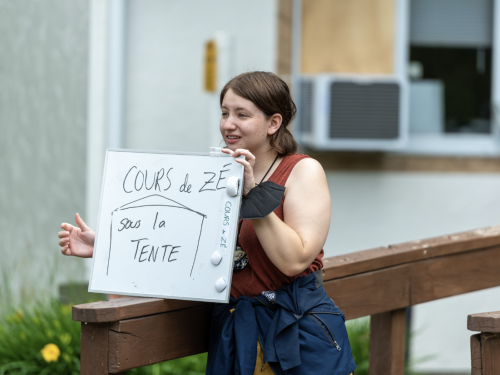
Concordia Language Villages staff may speak a Village language, creatively teach culture, work and play hard. They also develop skills and qualities that will make them excellent employees in any field.